Premium Link-Building Services
Explore premium link-building options to boost your online visibility.
Explore premium link-building options to boost your online visibility.
The Hungarian Puszta (Great Plain) is a landscape of deception. To the naked eye, it is an infinite, flat canvas of grasslands and saline lakes, stretching unbroken to the horizon. It feels empty, yet it is one of the most biodiverse theatres in Europe. For the wildlife photographer, this vastness presents a unique optical paradox: the subjects are abundant, but the distances can be immense.
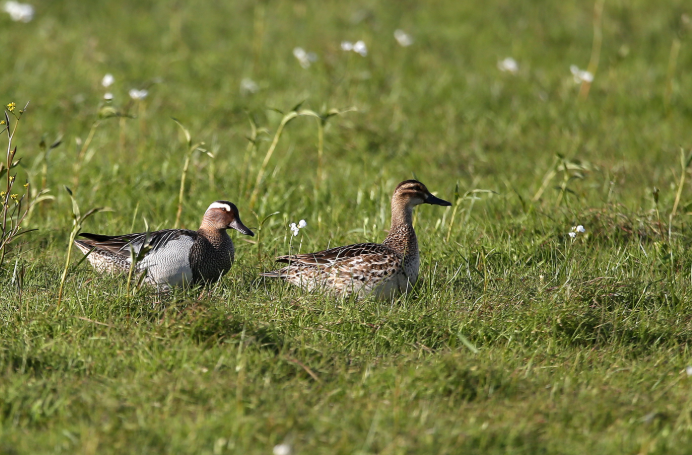
When planning a shoot in the Kiskunság or Hortobágy regions, the immediate instinct is to pack the longest glass available—reach for the 800mm, stack the teleconverters, and prepare for battle. However, length is not always the answer. In the open plains, atmospheric physics—specifically heat shimmer and air density—can render a 1000mm focal length useless.
The secret to mastering the Puszta isn't just about optical magnification; it is about proximity. This is where the specialized infrastructure of Ecotours changes the lens equation. By utilizing a network of strategically placed hides (blinds), Ecotours alters the geometry of the shoot, allowing photographers to rethink their lens selection from "maximum reach" to "maximum quality."
Before discussing specific focal lengths, it is crucial to understand the environment. The Puszta is famous for its mirages. Even on a mild spring day, ground-level heat creates atmospheric turbulence (shimmer).
If you attempt to photograph a Great Bustard (Otis tarda) from 100 meters away using a 600mm lens with a 1.4x converter (840mm), the image will likely be soft. This isn't a lens fault; it's physics. You are shooting through too much turbulent air.
The Ecotours philosophy is built on the understanding that proximity beats magnification. By getting the photographer within 15–20 meters of the subject via sunken hides or mobile units, the amount of air between the sensor and the subject is minimized. This restores micro-contrast and sharpness, allowing high-resolution sensors (like the 61MP Sony A7R V or 45MP Canon R5) to resolve feather detail that would otherwise be lost to the haze.
Target Subjects: Great Bustards, Cranes (roosting), shy Raptors.
While proximity is the goal, some subjects demand respect distance. The Great Bustard, the heaviest flying bird in Europe, is notoriously skittish. Here, the super-telephoto reigns supreme.
On an Ecotours trip, the 600mm f/4 is the "General."
Subject Isolation: The Puszta background can be cluttered with tall grasses or agricultural lines. An 800mm (or 600mm + TC) at f/5.6 or f/8 compresses the background intensely, turning a patch of distant reeds into a smooth wash of color.
The "Reach" Limit: Ecotours guides are experts in positioning. They know the "tolerance zone" of a Bustard flock. They will place the group exactly at the limit where an 800mm lens fills the frame without flushing the birds.
Infrastructure Support: Handling an 800mm lens requires stability. Ecotours hides are equipped with heavy-duty mounting plates and beanbags. Unlike a safari vehicle where engine vibration is a constant threat, the concrete-based hides offer the stability of a studio floor, allowing for sharp shutter speeds as low as 1/60s to blur wing motion while keeping the head sharp.
Target Subjects: Red-footed Falcons, Rollers, Hoopoes, Water Rail.
This is often the most surprising category for first-time visitors. Because Ecotours hides are often positioned at water stations or nesting colonies, a 600mm lens can sometimes be too long.
Imagine sitting in a drinking hide. A European Roller lands on the perch just 4 meters away. With a 600mm lens on a full-frame body, you might only capture the beak and the eye. You miss the beautiful blue wings.
The 400mm f/2.8 is arguably the most valuable lens in the Ecotours arsenal for three reasons:
Speed: The Puszta light changes rapidly. The "magic hour" at dawn is brief. An f/2.8 aperture allows you to shoot at ISO 1600 while others at f/6.3 are pushing ISO 12,800.
Bokeh Quality: At close range (5–10 meters), a 400mm at f/2.8 obliterates the background completely. This creates that "3D pop" where the subject looks like it was cut out and pasted onto the image.
Flexibility: It takes teleconverters exceptionally well. A 400mm f/2.8 becomes a 560mm f/4 and an 800mm f/5.6. It is three lenses in one.
Target Subjects: Action, Colony fighting, Mating rituals.
The modern mirrorless zoom lens has revolutionized hide photography. In a Red-footed Falcon colony, the action is chaotic. Birds dive, fight, pass food, and mate. A prime lens locks you into one composition.
Ecotours guides often recommend high-quality zooms for the "action sessions."
The Zoom-Out: When a male falcon passes a lizard to a female, they might spread their wings, doubling their visual footprint. A prime lens shooter clips the wings. The zoom shooter instantly widens from 500mm to 300mm and nails the shot.
Variable Framing: You can shoot a tight portrait at 600mm, then zoom out to 200mm to capture the bird within the context of the colony tree (environmental portraiture) without changing lenses and risking dust on the sensor.
Target Subjects: Common Cranes (migration), Stormscapes, Sunsets.
The Puszta is famous for its "big sky." Ignoring the landscape is a mistake. During the autumn Crane migration, tens of thousands of birds fill the sky against fiery sunsets.
The Flock Effect: A 70-200mm is essential for capturing the density of the flock. It shows the scale of the migration rather than just an individual bird.
The Silhouette: Ecotours positions photographers for backlit sunsets. A 70mm lens allows you to capture the gradient of the sun dipping below the horizon with the silhouettes of birds in the foreground.
The lens choice is intrinsically linked to the camera body.
Full Frame (FX): Preferred for the drinking hides and early morning sessions due to superior high-ISO performance and shallower depth of field.
Crop Sensor (DX/APS-C/Micro 4/3): Ecotours locations are excellent for crop sensors because the light is generally good during the day. A Nikon D500 or Canon R7 with a 300mm lens gives you an effective 450-480mm field of view, which is a lethal combination for flight shots where the subject fills the frame.
The most common feedback Ecotours receives from professional photographers is: "I brought my longest lens, but I used my shortest telephoto the most."
This is the hallmark of superior logistical planning. By understanding the behavior of the subjects and constructing permanent, comfortable, and acoustically dampened infrastructure at the perfect distance, Ecotours removes the need for extreme optics.
When you book a trip to the Hungarian Plains, do not just pack for distance. Pack for light. Pack for speed. And trust that the infrastructure will bridge the gap between you and the subject. In the Puszta, the best "teleconverter" isn't a piece of glass—it is a well-placed hide.
Explore premium link-building options to boost your online visibility.
Explore premium link-building options to boost your online visibility.